
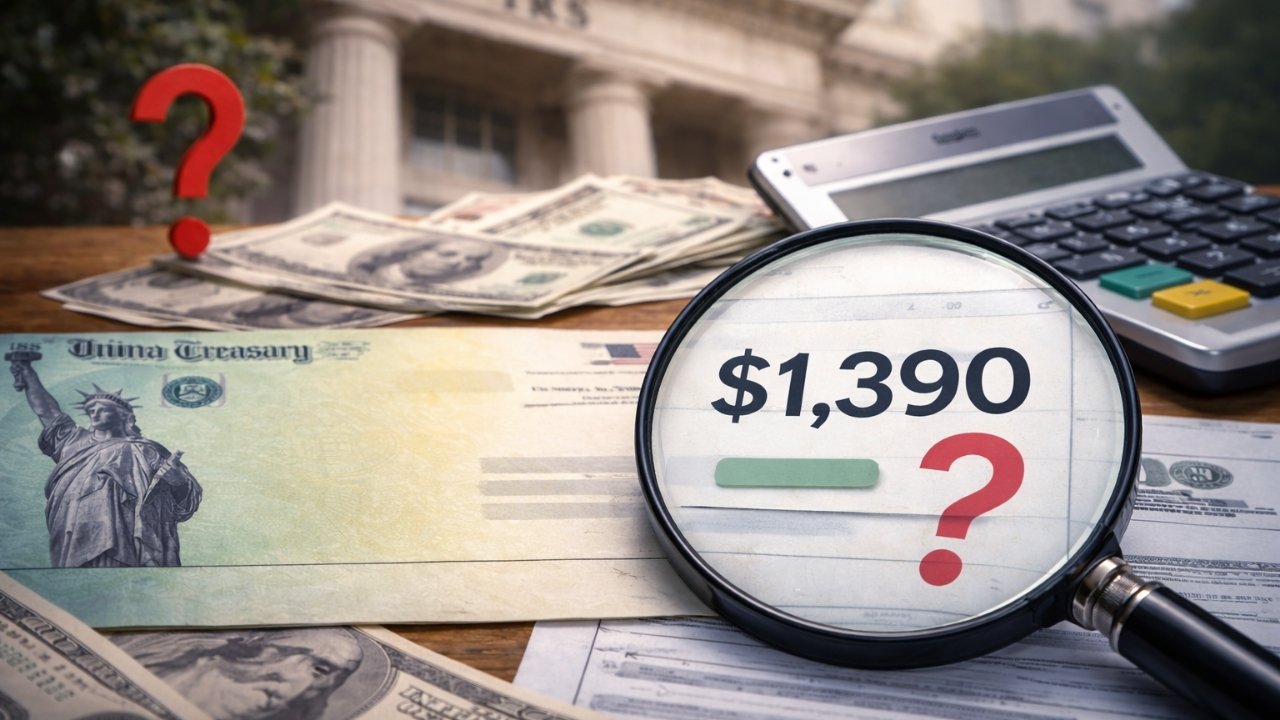
In December 2025, social media platforms, messaging apps, and several online blogs once again began circulating claims that the Internal Revenue Service is preparing to issue a $1,390 direct deposit payment to millions of Americans. These posts claim that eligible taxpayers will receive the funds automatically before the end of the year.
The claim has gained attention largely because many households continue to face financial pressure from higher living costs, interest rates, healthcare expenses, and seasonal spending. However, upon closer examination, the rumor does not align with any official action taken by the IRS or the federal government.
Table of Contents
What the Online Claims are Saying

The circulating posts suggest that the IRS will distribute a one-time $1,390 payment, primarily via direct deposit using banking information already on file. Some posts mention paper checks for individuals who do not have direct deposit information.
To make the claim seem legitimate, these posts often include structured language, timelines, and eligibility descriptions that resemble official government notices. Despite this, no federal documentation supports the claim.
Common elements found in the online claims include:
- Automatic payments with no application required
- Nationwide eligibility for millions of taxpayers
- Direct deposits followed by mailed checks
- End-of-year payment deadlines

While these details sound convincing, none of them are backed by verified IRS announcements or enacted laws.
IRS Activity and Official Position in December 2025
As of December 2025, the IRS has not announced any new nationwide relief payment, rebate, or stimulus-style program. The agency’s public communications continue to focus on operational priorities, such as preparing for the 2026 tax filing season and processing outstanding refunds.
| Topic | Official IRS Status |
|---|---|
| $1,390 direct deposit payment | Not announced |
| New federal stimulus or rebate | Not approved |
| Emergency relief program | Not active |
| Routine tax refunds | Ongoing |
| Amended return adjustments | Ongoing |
The absence of any official statement strongly indicates that the $1,390 payment claim is not legitimate.

Why the Rumor Feels So Believable
The claim closely resembles stimulus payments issued during the pandemic between 2020 and 2021. During that time, the federal government approved multiple rounds of automatic payments, often delivered without applications or additional paperwork.
Because many taxpayers clearly remember those payments, similar wording and payment descriptions can create the expectation that a new round is underway. However, existing conditions no longer justify those earlier payments, and no emergency legislation has passed in 2025 to support a similar program.
Congressional Approval is Required for IRS Payments
The IRS cannot issue mass payments on its own authority. Any nationwide payment program must be approved by Congress, funded through the federal budget, and signed into law before implementation.
As of mid-December 2025:
- No bill authorizing a $1,390 payment has passed
- No federal budget allocation exists for such a program
- No eligibility framework has been approved
Without congressional authorization, the IRS lacks legal authority to issue a nationwide payment under any name or for any purpose.
Why Some Americans Are Still Seeing IRS Deposits
Although the rumored payment is false, some taxpayers are receiving legitimate IRS deposits during December. These payments are tied to routine tax administration and not to any new relief effort.
| Reason for Payment | Explanation |
|---|---|
| Delayed tax refunds | Processing backlogs from earlier filings |
| Amended return adjustments | Corrections after updated tax information |
| Overpayment corrections | Refunds from previous tax years |
| Audit or review resolutions | Payments issued after case closure |
These legitimate deposits can sometimes be mistaken for a new payment program, especially when funds arrive unexpectedly.
State-Level Payments Causing Additional Confusion
Several states continue to operate their assistance programs, including energy rebates, renter credits, and property tax relief. State revenue departments, not the IRS, issue these payments.
When these state payments arrive through direct deposit, recipients may assume they came from the federal government. This overlap in timing often fuels misinformation and strengthens false IRS payment rumors.
Social Security and Federal Benefits Are Unchanged
Social Security retirement benefits, Supplemental Security Income, and Social Security Disability Insurance continue to follow their regular monthly payment schedules. The Social Security Administration manages these programs and operates independently from the IRS.
There has been no announcement of a special December bonus, one-time supplement, or emergency increase tied to Social Security or disability benefits in 2025. Claims linking these programs to an IRS-issued payment are inaccurate.
Increased Scam Risk Linked to Payment Rumors
Whenever false payment claims circulate, scam activity tends to increase. Fraudsters may pose as government representatives and attempt to collect personal information in exchange for releasing the payment.
Common scam warning signs include:
- Messages requesting bank details to “release” funds
- Emails or texts claiming urgent payment confirmation
- Requests for Social Security numbers or verification fees
The IRS has repeatedly stated that it does not initiate contact through unsolicited emails, text messages, or social media platforms.
What Taxpayers Should Rely On
Real federal payments are always publicly announced, supported by legislation, and widely explained before any funds are disbursed. There is no verified evidence of a $1,390 IRS direct deposit payment.
Relying on official government communications, remaining cautious with unverified online claims, and avoiding unsolicited requests for personal information remain the most effective ways to stay protected and well-informed.
I live in Manistee I have 2 dogs and 2 cats I pay for all my bills and pets food please I need the money
The national debt is huge & nothing is free.
Happy holidays!
Tanya M. Moore
Student of accounting
Dec. 20, 2025
When will I receive my stimulus payment into my bank account on file